Zendiac Live Astrology, Guruji
- 4.7
- Rating
- 50.00K
- Installs
- Free
- Price

 Analysis by App-foxy
I approached Zendiac Live Astrology as a lifestyle app for people who want astrology to feel more personal than a quick daily horoscope. Its central appeal is the possibility of getting a reading shaped around your own questions and journey, with access to expert astrologers rather than relying only on a fixed paragraph written for a broad zodiac sign. That difference sounds small, but in everyday use it changes what the app is good at: reflection, conversation, and focused guidance instead of passive scrolling.
My overall impression is that Guruji is most useful when I treat astrology as a prompt for thinking clearly about a situation. It can be a gentle way to pause before making a decision, examine a relationship concern, or start a personal routine. I would not use it as a substitute for professional medical, financial, or mental-health advice, and I would be cautious about handing over important decisions to any horoscope-based service. Used with that boundary in mind, it offers a more interactive experience than the usual horoscope alternatives.
Personal readings are the reason to try it
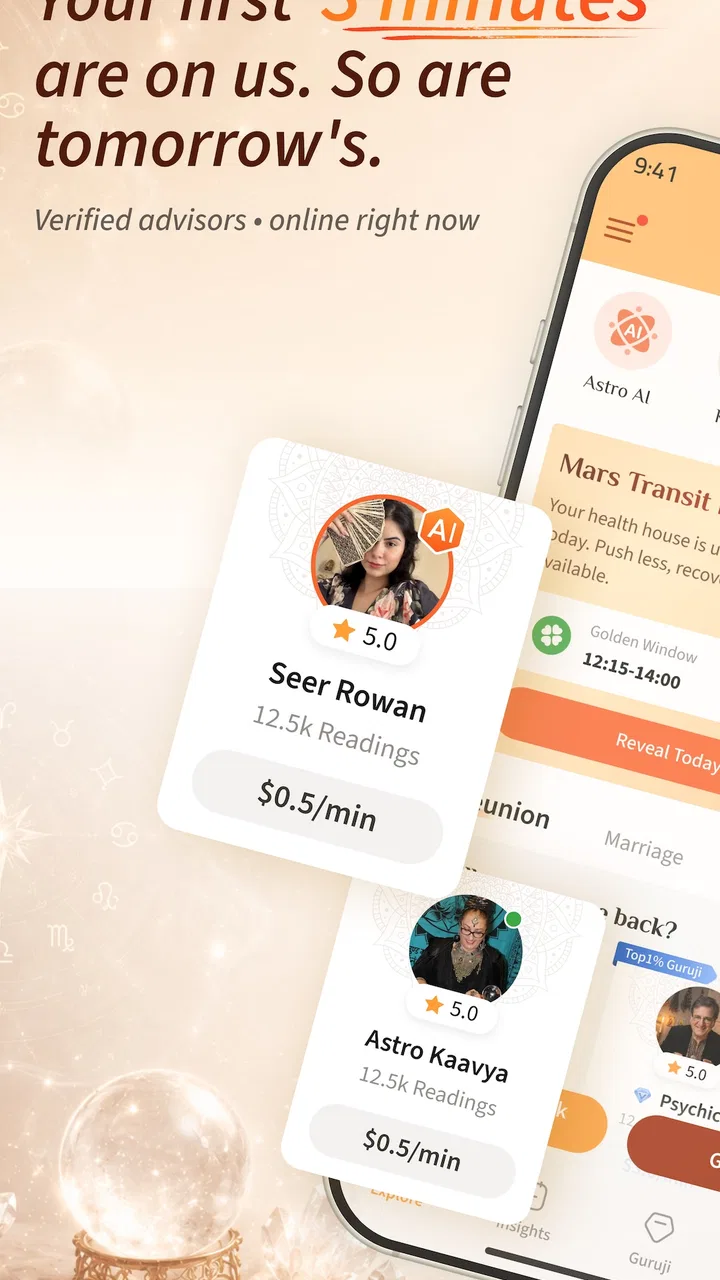
The defining capability here is the personalized reading. Instead of opening an app simply to see what a generic sign forecast says, I can approach a specific concern and look for an interpretation that feels connected to my circumstances. That makes the experience less like checking a notification and more like having a structured conversation about a topic that is already on my mind.
You May Also Like

 AccuWeather: Weather Radar
AccuWeather Review: A Quick, Clear Forecast for Everyday Decisions
For everyday plans, the best forecast is the one you can understand quickly. AccuWeather makes rain timing, radar, and local conditions easy to act on, with a few trade-offs.

 Hill Climb Racing
Why Hill Climb Racing Still Turns Crashes Into One More Run
A tiny car, a bumpy hill and one more upgrade: Hill Climb Racing keeps resurfacing because its simple chaos makes every near-miss feel personal.

 AliExpress - Shopping App
AliExpress Makes Global Shopping Feel Personal, but Shoppers Bear the Risk
AliExpress turns a global marketplace into a pocket-sized discovery engine. Its reach is useful, its shopping loop compelling, and its trade-offs easy to miss.

 Lords Mobile: Kingdom Wars
Lords Mobile Is a Kingdom-Building Routine, Not a Quick Match
A case-by-case verdict on the building, battles, device demands, and social commitments that make Lords Mobile rewarding for some players and exhausting for others.

 PDF Scanner app - TapScanner
TapScanner Makes Paperwork Easier to Capture, Check, and Share
TapScanner makes scanning with a phone feel less like a rescue operation and more like a dependable step in getting work done. Its capture tools are useful, though not flawless.

 Block Blast!
 Shows How Much a Puzzle Game Can Leave Out
A quiet grid game shows why puzzle players increasingly value instant clarity, repeatable skill and low-pressure play—and where the genre still needs to catch up.
More From Our News Desk
View All News


This focus matters because broad horoscopes are easy to consume but often difficult to apply. A sentence about “new opportunities” can mean almost anything. A personal reading, by contrast, gives me a reason to frame the question more carefully. Even before receiving guidance, writing down what I actually want to understand can expose whether I am looking for reassurance, a new perspective, or a firm answer that no astrology app can responsibly guarantee.
Guruji’s positioning around live astrology also gives it a different feel from a library of prewritten zodiac content. The value is not just the topic of astrology; it is the attempt to connect the reading with a person’s own journey. That is the feature I would emphasize to a friend considering the app. If you only want a quick forecast for entertainment, there are simpler options. If you want to discuss one concern in a more direct and personalized way, this is where the app becomes more interesting.
The app comes from Lightweight Technology Co., Ltd and sits in the lifestyle category. It is free to install, which makes trying the basic experience less of a commitment. The audience is broad as well: the content rating is Everyone, so the app is presented as suitable for a general audience rather than a narrowly defined age group.
What personalization changes in real use
Personalization does not automatically make a reading accurate or useful. Its real benefit is that it encourages a better question. When I move from “What will happen to me?” to something more practical such as “Why am I hesitating about this change?” or “How can I handle tension in this relationship?”, the session becomes easier to reflect on. I can compare the reading with facts I already know instead of treating a vague prediction as an instruction.
A useful habit is to separate the symbolic part from the actionable part. I might enjoy the astrological interpretation, then write down one small, sensible action that does not depend on the prediction being literally true. For example, if a reading highlights communication, the practical takeaway could be preparing for a calm conversation rather than assuming that a particular outcome is destined. The strongest use of the app is as a reflection tool, not a decision-making authority.
That distinction also helps with emotional topics. When I am anxious, a dramatic prediction can feel more powerful than it deserves to be. I would avoid repeatedly asking the same question until I receive a comforting answer. A better workflow is to ask once, note what resonates, and then return to the real-world situation. This keeps the reading from becoming a loop of reassurance-seeking.
How I would use a session
I would begin with one subject rather than several unrelated questions. A session about work, relationships, family, and money all at once is likely to become difficult to evaluate. A narrow question gives the astrologer or reading a clearer direction and gives me a better chance of noticing whether the guidance is genuinely relevant.
Before starting, I would write a short private summary of the situation in ordinary language. I would include what has happened, what I am worried about, and what kind of clarity I want. This preparation is one of the less obvious advantages of a personalized astrology app: it makes me articulate the issue before looking for an interpretation. Even if the reading is not persuasive, that preparation can still be useful.
Afterward, I would avoid treating every detail as a promise. I would mark the parts that offer a constructive perspective and ignore anything that encourages fear, dependence, or reckless action. This is especially important for questions involving health, legal matters, major purchases, or personal safety. In those cases, the app may provide a moment of reflection, but qualified real-world advice is the better choice.
A realistic everyday scenario
Imagine I have received an offer to change jobs but feel torn between stability and growth. I could open Guruji with a focused question about the transition rather than asking whether the new role is “meant to be.” A personalized reading might help me think about timing, confidence, communication, or the fears behind my hesitation. I would then compare that perspective with concrete information: salary, responsibilities, commute, working conditions, and the people involved.
In that scenario, the app is valuable because it creates a pause between emotion and action. It may help me name the conflict I am already experiencing. It cannot verify whether the employer is reliable or whether the role will suit me, so I would never let the reading replace research or a practical conversation. The best result is not a prediction that makes the choice for me; it is a clearer understanding of why the choice feels difficult.
The same approach could work for a relationship concern. I might use a session to reflect on repeated misunderstandings, then turn the useful part into a simple plan: ask a direct question, listen without preparing a defense, or set a boundary. If the reading makes me more thoughtful and less reactive, it has served a purpose. If it makes me suspicious of someone without evidence, I would consider that a warning sign and step away from the interpretation.
For a daily routine, I could use the app at a consistent time, perhaps before journaling, and keep a short note of recurring themes. I would not record every prediction as fact. Instead, I would look for patterns in my own reactions: which subjects keep returning, where I am avoiding action, and what kind of language helps me feel grounded. This turns the app into a reflective ritual rather than a stream of instructions.
Where it differs from ordinary horoscope apps
The usual alternative is a general horoscope app that presents short forecasts for zodiac signs. Those apps are convenient and often better for a quick, low-effort check. They can be entertaining during a spare minute, and they do not require me to explain a personal situation. If that is all I want, Guruji may feel more involved than necessary.
Guruji’s advantage is the personalized direction. It is better suited to a question that needs context than to a quick glance at a daily message. The trade-off is that a more personal experience demands more from me. I need to formulate a question, judge the advice, and maintain healthy skepticism. The app is not automatically better than a simple horoscope; it serves a different purpose.
Another alternative is speaking with an astrologer outside an app. A direct appointment may feel more substantial for someone who wants a longer conversation and a familiar professional relationship. Guruji is more convenient for an on-demand lifestyle, but convenience can also make it tempting to seek readings too often. I would choose the app for occasional guidance and reflection, while someone seeking an ongoing, deeper consultation may prefer a more consistent arrangement elsewhere.
Trade-offs to understand before spending time or money
The free entry point is helpful because I can decide whether the tone and format suit me before committing. At the same time, the app includes optional in-app purchases ranging from forty-nine cents to one hundred nineteen dollars and ninety-nine cents per item. That is a wide span, so I would pay close attention to the purchase screen and the exact session or service being selected before confirming anything.
This is not a criticism of paid guidance itself. A live or personalized service can reasonably involve costs. My concern is behavioral: astrology is often used when people feel uncertain, lonely, or emotionally exposed, which can make additional readings feel urgent. I would set a personal spending limit in advance and avoid buying another session simply because the first answer was not what I hoped to hear.
The app’s current version is 3.1.0, and it requires Android 7.0 or later. For someone using a much older device, compatibility is the first practical checkpoint. On a supported phone, I would still keep expectations realistic about the experience. A personalized reading is not the same as a guaranteed prediction, and the presence of an expert astrologer does not remove the need to evaluate advice thoughtfully.
There is also a privacy and emotional-boundary trade-off whenever I share personal concerns in a lifestyle service. I would avoid including unnecessary identifying information and would keep especially sensitive details general unless they are genuinely needed for the question. This is good practice for any app involving personal conversations, and it matters even more when the subject is family conflict, health anxiety, or finances.
The rating is a strong four-point-seven average from around two hundred seventy-three ratings, while the app has over nine reviews shown in its public profile. That suggests a positive early impression, but I would not treat it as proof that every reading will feel accurate or equally helpful. Astrology is personal, and the quality of an individual session can matter more than a broad score.
Who should be cautious
I would skip Guruji if I want evidence-based answers, exact forecasts, or a tool that can verify what will happen next. It is also not the right choice for someone who tends to make major decisions based on predictions alone. A budgeting app, a career adviser, a doctor, or a trusted conversation with someone involved in the situation will be more appropriate depending on the question.
I would also be cautious if I know that repeated readings increase my anxiety. The personalized format can feel absorbing, and that is useful only when it supports calm reflection. If I notice myself checking constantly, spending more than planned, or interpreting ordinary events as signs of danger, I would take a break. No lifestyle app should become the main way I manage uncertainty.
On the other hand, people who enjoy astrology as a reflective practice may find the format more satisfying than generic daily forecasts. It suits users who are willing to ask focused questions, consider several interpretations, and keep practical judgment in charge. It may also appeal to someone who wants a small ritual for journaling or self-examination rather than another productivity system.
My recommendation for the right kind of user
What I like most about Guruji is the way its personalized focus can turn a vague horoscope habit into a more deliberate conversation. The app gives me a reason to pause, describe the situation honestly, and examine what I am actually seeking. That is a meaningful difference from simply reading a broad sign forecast and moving on.
I would recommend trying the free experience if you are curious about live, personalized astrology and can keep clear boundaries around money and decision-making. Start with one modest question, write down your own context first, and judge the session by whether it helps you think more clearly rather than whether every prediction comes true. That method gets more value from the app while reducing the risk of overreliance.
Guruji is not for everyone, and its paid options make self-control important. Still, as a lifestyle app built around personal readings, it has a clear purpose. The developer, Lightweight Technology Co., Ltd, has made something aimed at users who want astrology to feel interactive and relevant to their own concerns. If you want reflection with an astrological lens, rather than certainty about the future, this is the audience experience I would recommend.
FAQs for Zendiac Live Astrology, Guruji
01What is Zendiac Live Astrology, Guruji, and what can I use it for?
Zendiac Live Astrology, Guruji is an astrology and spiritual guidance app designed to provide personalized horoscope information, astrological consultations, and answers related to areas such as relationships, career, finances, health, and personal growth. Depending on the available services, users may be able to connect with an astrologer or Guruji through live chat, calls, or other consultation features. It is best used for reflection and entertainment rather than as a substitute for professional medical, legal, or financial advice.
02How does a live astrology consultation work in the app?
After creating an account, users can typically browse available astrologers or Guruji profiles, review their areas of expertise, availability, language, and consultation rates, and then choose a preferred communication method. A session may take place through text chat, voice calling, or video, depending on the app’s current features. Before starting, check the astrologer’s profile, pricing, session duration, and cancellation rules so there are no unexpected charges.
03Is Zendiac Live Astrology, Guruji free to download and use?
The app may be free to download, but some features can require payment. Basic horoscope content or limited access may be available without charge, while live consultations, premium predictions, virtual services, or extended conversations may use paid credits, subscriptions, or in-app purchases. Pricing and available plans can change, so review the payment screen carefully before confirming a transaction and check whether recurring billing is enabled.
04Does the app require my personal information or birth details?
Astrology applications commonly request information such as your name, date of birth, exact birth time, and place of birth to prepare a natal chart or personalized reading. Zendiac Live Astrology, Guruji may also request an email address or phone number for account access and communication. Only provide information you are comfortable sharing, review the app’s privacy policy, and avoid submitting highly sensitive details that are not necessary for an astrology consultation.
05Can I rely on the predictions or advice provided by Zendiac Live Astrology, Guruji?
Astrological readings are interpretive and should not be treated as scientifically verified predictions or guaranteed outcomes. The quality of a consultation may vary depending on the individual astrologer, the information provided, and how the reading is interpreted. Use the app as a source of personal reflection, cultural or spiritual guidance, and entertainment. For important decisions involving health, money, legal matters, or safety, always consult a qualified professional.
Pros
- Personalized astrology guidance through live consultations.
- Guruji’s advice can feel more engaging than automated horoscope apps.
- Useful for discussing specific questions about relationships or life choices.
- Live sessions offer a more personal experience than reading generic forecasts.
- Simple concept for users interested in spiritual guidance and astrology.
Cons
- Advice quality may vary between consultations and individual astrologers.
- Live consultations may require payment or in-app purchases.
- Availability can depend on the astrologer’s schedule and time zone.
- Astrological guidance is subjective and should not replace professional advice.
- Privacy may be a concern when sharing personal details during sessions.

Zendiac Live Astrology, Guruji
Gallery